©2026 First Aid Air Conditioning Inc. All rights reserved. A Trades Mosaic Company, designed by RMH Websites.



A Palm City homeowner called us on a Saturday afternoon in May with a problem that pretty much every Florida homeowner runs into eventually. The AC was running constantly but not cooling. She'd noticed condensation pooling around the indoor unit and a steady drip onto the floor in the utility closet. The thermostat was set to 74 but the indoor temperature was climbing past 80 and still going up. She'd checked the obvious stuff (filter, thermostat batteries, breaker), and when nothing fixed it she called us.
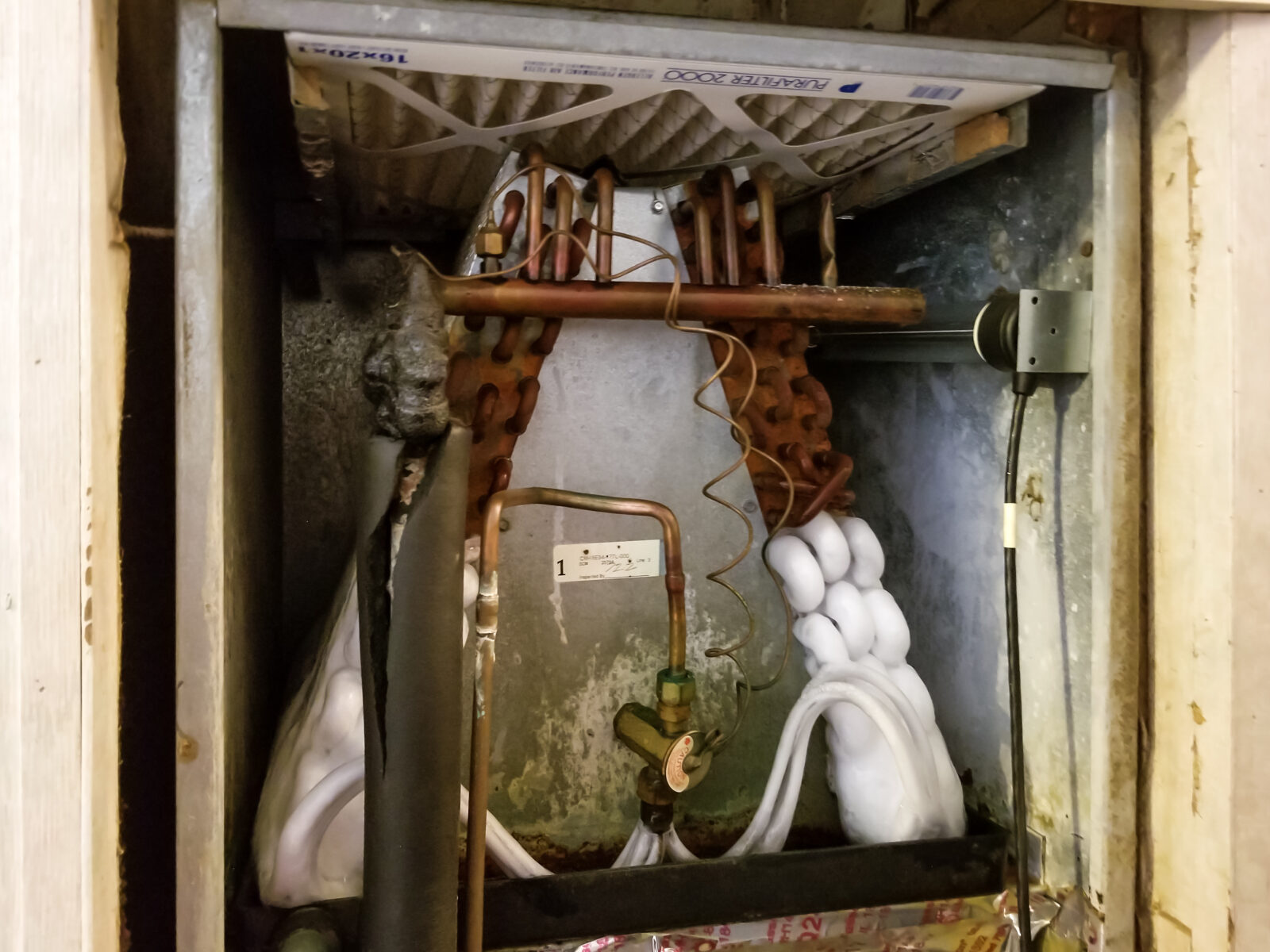
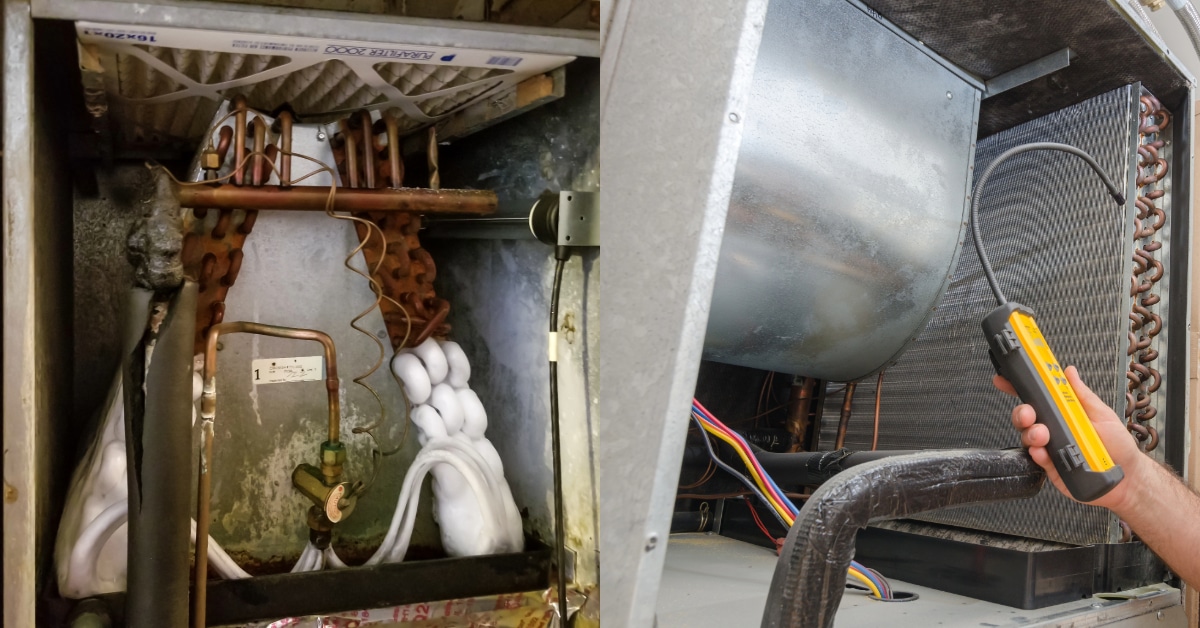
By the time our tech arrived about ninety minutes later, the evaporator coil had frozen into a solid block of ice. You could see the frost line right through the indoor unit access panel. The blower was still running, pushing air over the frozen coil, which is why the system felt like it was working but no actual cooling was happening. Running a frozen system can damage the compressor by sending liquid refrigerant back to it (compressors are built to compress vapor, not liquid), so step one was shutting the entire system down. That's not optional.
This is a classic Florida AC pattern that's worth explaining because so many homeowners hit it. The freeze happens when refrigerant pressure drops low enough that the remaining refrigerant boils off at a temperature below 32 degrees instead of around 40 degrees, which is the normal operating range. When that happens, the coil surface temperature drops below freezing. Moisture in the indoor air condenses on the cold coil (which is normal) but then freezes solid instead of running off to the condensate drain. Once ice starts forming, it insulates the coil from the air, which makes cooling worse, which drops pressure further, which freezes faster. By the time the homeowner notices the system isn't cooling, the coil is usually already a solid block.
The root causes are almost always one of three things. A refrigerant leak that dropped the system charge. A dirty air filter or blocked return that cut airflow over the coil. Or a failing blower that's not moving enough air. In Palm City homes, the refrigerant leak is the most common cause, especially on systems pushing past their tenth year.
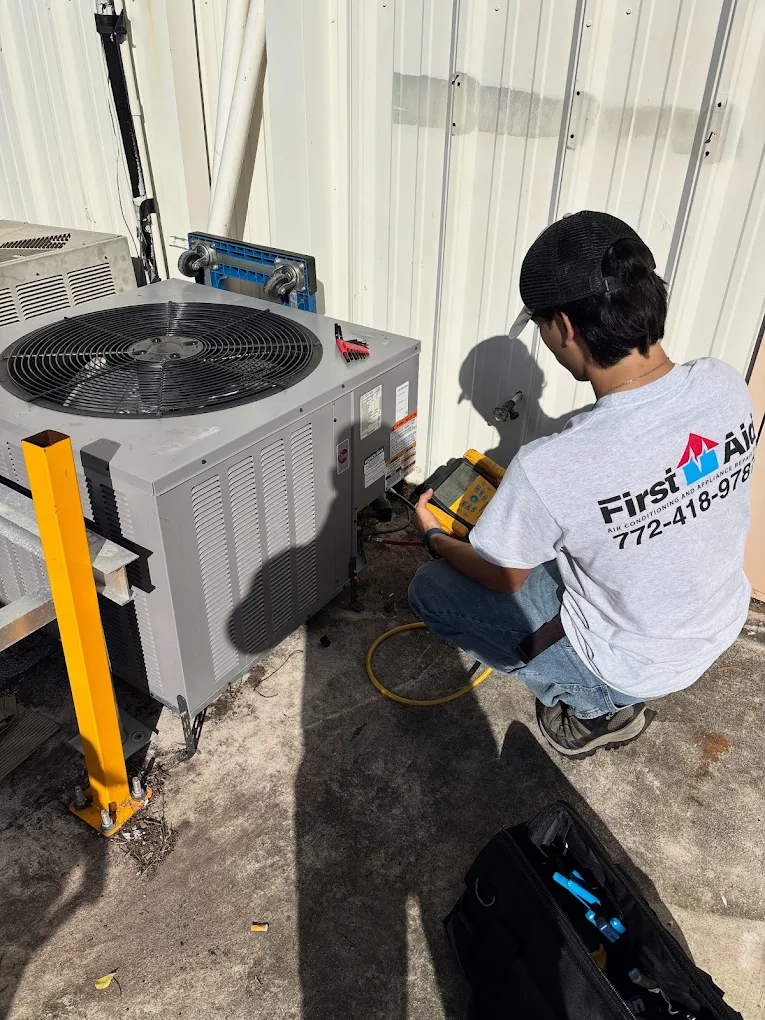
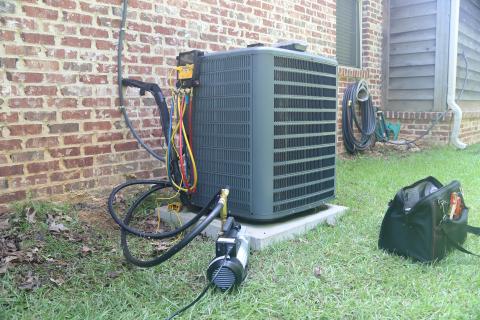
While we waited for the coil to thaw (which takes about an hour with the blower off and the system powered down), we ran a leak detection across the line set using an electronic refrigerant sniffer. Found a small leak at one of the service-valve fittings on the outdoor condenser. Not a big leak. Small enough that the system had been losing maybe a quarter pound of refrigerant per month, slow enough that the homeowner had no symptoms until the charge finally dropped below the threshold where the coil could maintain temperature. Sealed the leak with the proper service-valve gasket replacement. Pressure-tested the lines to confirm there were no other leaks. Pulled a vacuum on the system to evacuate any moisture or air that had gotten in during the repair. Recharged the system to manufacturer spec, which on this system meant adding about a pound and a half of R-410A refrigerant to bring it back to design pressure.
We also pulled the air filter to verify airflow. It was old enough to be contributing to the freeze risk, so we replaced it with a fresh one and recommended she switch to a higher-quality MERV 11 filter on the next change. We also walked her through how to check the filter monthly and what airflow restrictions to watch for between visits.
Total time on site, about three hours including thaw time. Cold air was blowing by mid-afternoon. We followed up at the 30-day mark to verify the refrigerant charge was holding (it was) and that the leak repair was permanent. No leak detected, system holding charge at spec, homeowner happy.
If you ever notice your AC running but not cooling, and especially if you see ice or condensation around the indoor unit, do this in order. First, turn the system off at the thermostat. Don't keep running it. Second, check that the filter isn't clogged. Replace if needed. Third, give the coil a few hours to thaw. Fourth, call us. The longer a frozen system runs, the higher the risk of compressor damage, and a compressor replacement on a Florida AC system runs $1,500 to $2,500 in parts and labor compared to maybe $250 for a refrigerant recharge if we catch it early. Call 772-418-9787 and we'll dispatch a tech the same day when techs are available.



.svg)
.svg)