©2026 First Aid Air Conditioning Inc. All rights reserved. A Trades Mosaic Company, designed by RMH Websites.

.svg)
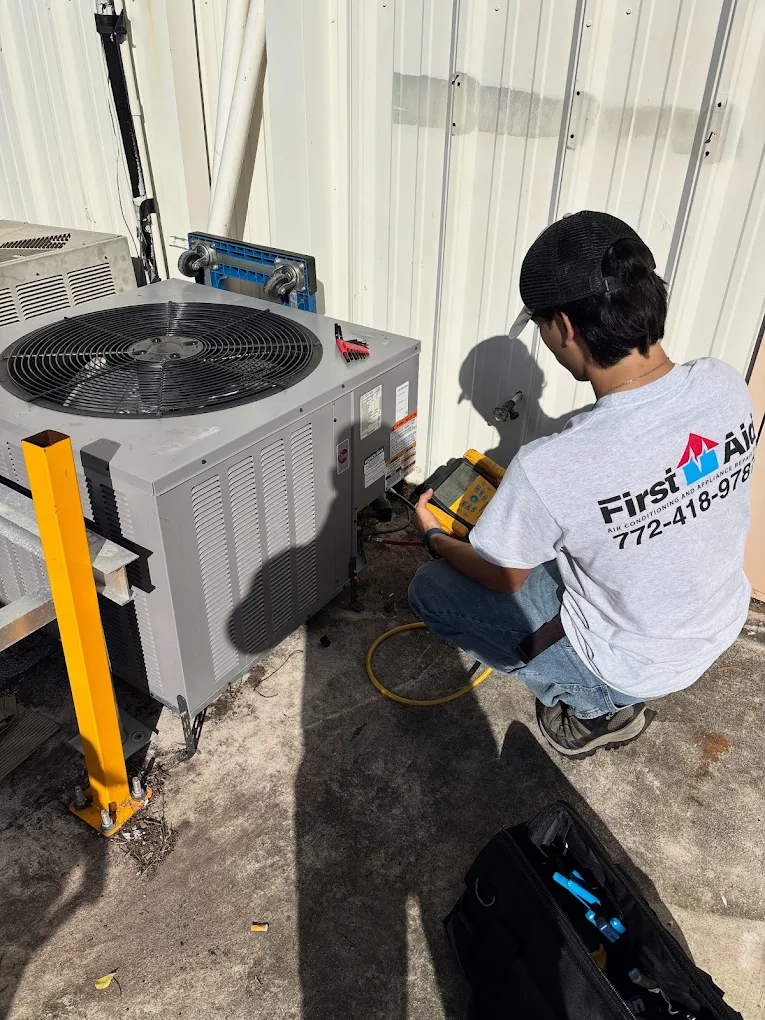
One of our maintenance plan members in Hobe Sound had her spring tune-up booked for early April. Routine visit, two hours, nothing special. The kind of thing most homeowners think of as a formality, because the AC was running fine and there was no symptom to fix. The whole point of preventive maintenance is to catch things before they become symptoms, which is exactly what happened on this visit.
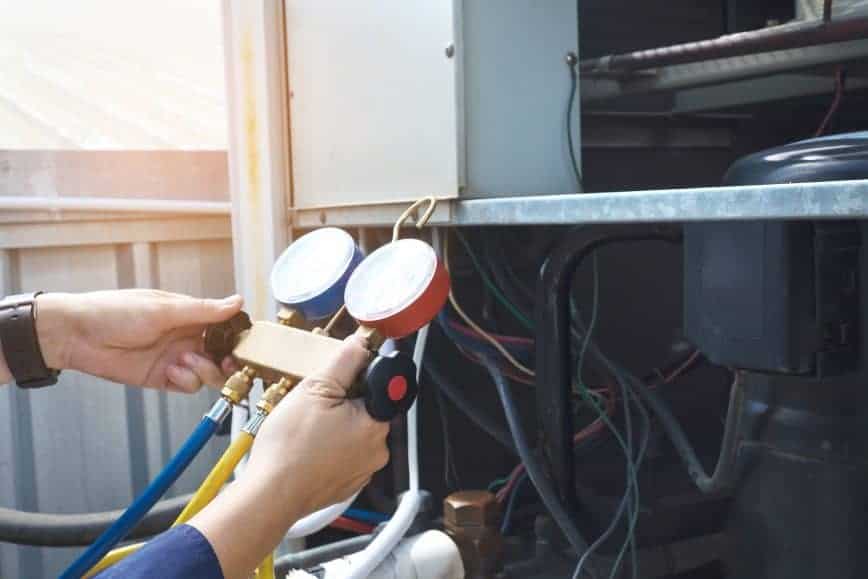
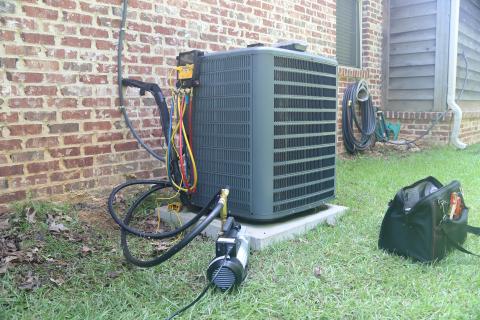
During the routine outdoor unit inspection, our tech tested the capacitor on the condenser using a digital multimeter set to capacitance. The capacitor is the part that gives the compressor a boost of starting torque every time the system cycles on, and it's also the single most common AC part to fail in Florida. The reading came back at about 28 microfarads. The capacitor was rated for 35 microfarads with a tolerance of plus or minus six percent. So the actual minimum acceptable reading was about 33 microfarads, and the reading was well below that. The capacitor was weak.
Now here's the thing about a weak capacitor. The reading wasn't bad enough yet to stop the system from running. The compressor was still starting on cycles, the AC was still cooling, and the homeowner had no symptom to point at. But the capacitor was deteriorating, and running the system through a few more 95-degree afternoons in July was almost certainly going to finish it off. When that happened, the compressor would fail to start. The homeowner would be looking at an emergency dispatch call (after-hours fee or weekend rates), an emergency parts visit, and a no-AC house for whatever stretch it took us to get there with a replacement capacitor.
We replaced the capacitor on the spot. About forty dollars in parts. Twenty minutes of labor. Covered at the plan member rate, which is significantly below our standard non-member capacitor replacement price. No emergency call. No missed AC during the hottest weeks of summer. No drama. The system was back to running on a fresh capacitor, the homeowner went on with her day, and we crossed the next preventive item off the checklist.
This is exactly why we recommend two tune-ups a year in Florida, not the standard one annual visit that homeowners in cooler climates can get away with. Spring catches what summer would otherwise break. A failing capacitor in April is a $40 part swap. The same failed capacitor in July is an emergency call, a panicked homeowner, possibly a damaged compressor (because the system tries to start on a dead capacitor and draws locked-rotor amps repeatedly), and a bigger bill that climbs fast.
Late summer catches what hurricane season would otherwise break. Refrigerant charge that's drifted out of spec, drain lines clogging up with algae from all the condensation Florida systems pull, contactor wear, and the kind of small electrical issues that turn into bigger ones when grid power starts cycling during storm recovery.
The math on a maintenance plan works out clearly. Two tune-ups a year cost less than one emergency repair. And manufacturer warranties on most AC systems require documented annual service to honor a claim, so skipping maintenance costs you more than the tune-up did the first time something major breaks under warranty.
Most homeowners think of a tune-up as a quick check and a cleaning. Ours is more thorough than that, because catching small issues early is the whole reason maintenance exists. Each visit covers coil cleaning (indoor evaporator and outdoor condenser), refrigerant charge verification with proper superheat and subcooling readings, electrical contact inspection for pitting and corrosion, capacitor and contactor testing with actual numbers (not just visual inspection), thermostat calibration, drain line clearing with anti-algae treatment, filter replacement or recommendation, blower motor inspection and amp draw measurement, and a written report showing exactly what we did and what we found.
If you've been getting away with the call-when-it-breaks approach to AC service, the Florida climate eventually catches up with you. Heat, humidity, salt air on coastal homes, and hurricane-season power surges all stress AC systems harder than they're stressed in northern climates. Two tune-ups a year, scheduled before peak heat and before peak storm season, catches the small things and prevents the big things. Call First Aid Air Conditioning at 772-418-9787 to talk about a maintenance plan for your home.


.svg)
.svg)