
©2026 First Aid Air Conditioning Inc. All rights reserved. A Trades Mosaic Company, designed by RMH Websites.



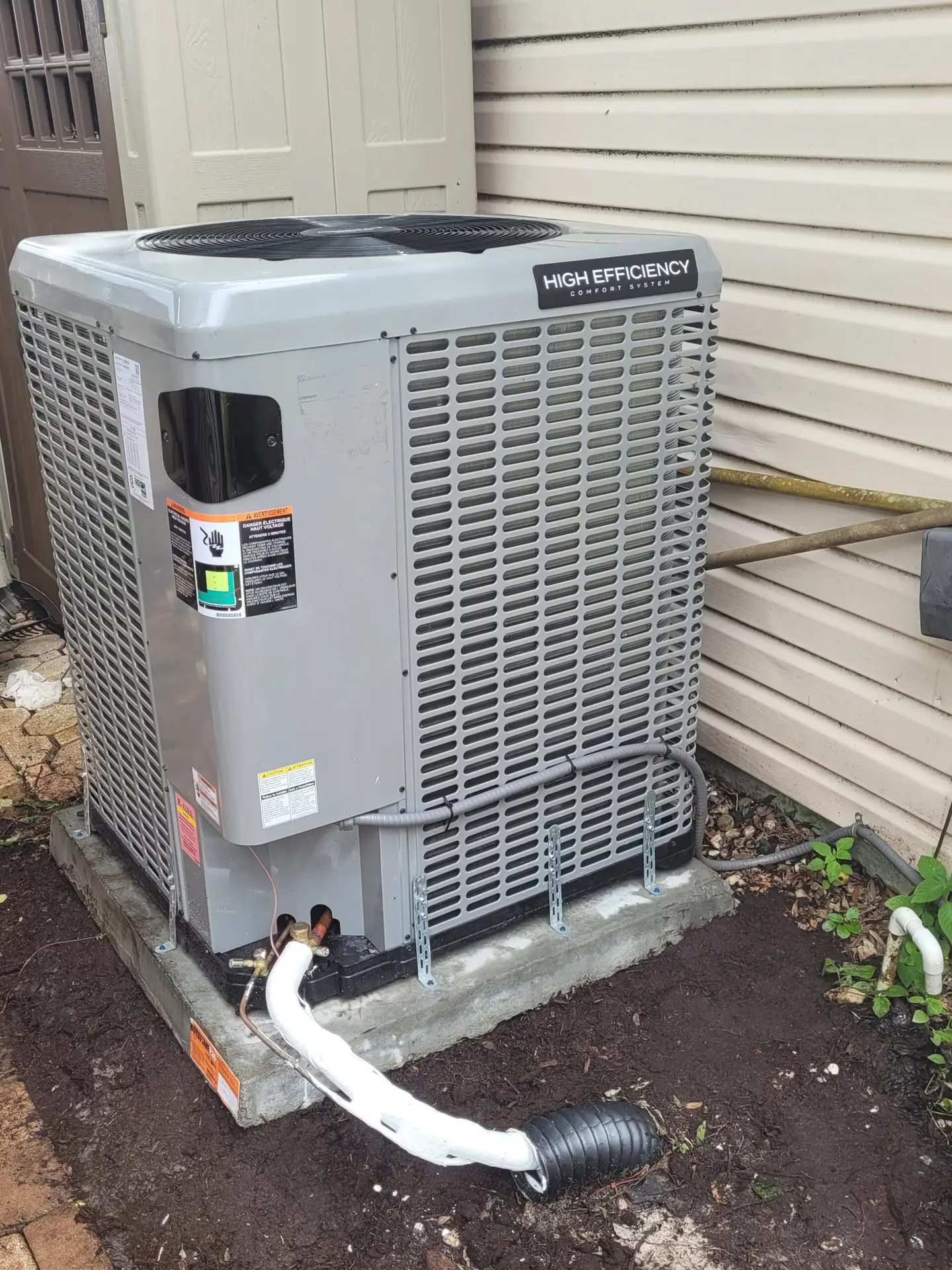
A Saint Lucie West homeowner called us about a creeping power bill problem that had been getting worse every summer for three years. The AC was a 10 SEER central unit installed in the early 2000s with the original house. It was still running, technically, but the monthly summer power bill had crept from manageable to painful, and the system was starting to short-cycle on the hottest afternoons. The breaking point was July's bill, which came in twice what it had been three Julys prior. They wanted to know whether to keep limping the old system along or pull the trigger on a replacement.
We came out for a system evaluation and did a proper Manual J load calculation on the house, which most contractors skip and which is the difference between sizing a replacement correctly and just throwing in a unit that matches the old one. The original system had been sized for the house as it was built. Years earlier the homeowner had added a small bedroom and bathroom addition off the back of the house, about 220 square feet of conditioned space. The original AC was never resized to account for the addition, which meant the compressor had been working overtime to cool a load it wasn't designed for. After three years of that, the compressor was on its last legs, which is why power bills were spiking. A failing compressor draws more amps to do the same work, and the system runs longer to hit setpoint.
The load calc came back at about 3.5 tons of needed cooling capacity. The original system was 3 tons. Undersized by roughly fifteen percent for the current footprint, which is enough to cause exactly the symptoms the homeowner was describing.
We talked through the choice between a straight AC replacement and a heat pump. In Florida, this question comes up often and the answer is usually heat pump. Heat pumps cool the same way a central AC does (compressor, condenser, evaporator, refrigerant) but they can also run the cycle in reverse to heat the home in winter. For a Florida home that gets occasional cold snaps but never serious sustained cold, a heat pump handles heating duty without needing a separate furnace or gas line. One piece of equipment, both jobs, lower overall maintenance, lower electrical bills in shoulder seasons, simpler home utility setup overall.
The cooling efficiency story is what most homeowners actually care about, and it's where heat pumps have come a long way. Modern variable-speed heat pumps cool more efficiently than older single-stage AC. They ramp capacity up and down with cooling demand instead of cycling on and off all day, which means better humidity control (huge in Florida), lower power draw at any given moment, quieter operation, and dramatically less wear on the compressor over the system's life.
We sized a new high-efficiency 3.5-ton variable-speed heat pump to the home's actual load, including the addition. Two-day install. Day one: removed the old outdoor condenser and indoor air handler, set new equipment in place, ran new refrigerant line sets (the old R-22 lines couldn't be reused for a new R-410A system), upgraded the electrical disconnect to current code, pulled the city permit. Day two: connected refrigerant lines, evacuated and charged the system, wired the new smart thermostat, ran through the commissioning checklist, scheduled the city inspection.
We registered the manufacturer warranty (ten years on parts) and walked the homeowner through the Hearth financing application for the qualified install cost. They got pre-approved in minutes without a credit hit and ended up with a monthly payment that was about equal to what their excess power bill spike had been costing them in the old system's last year.
The new system has been running for about three months at this point. Their first full summer billing cycle came in at right around what we projected: roughly thirty percent lower on AC-related power use compared to the same month the previous year. The system handles humidity noticeably better than the old single-stage unit, so the home feels cooler at a higher setpoint, which compounds the savings. Over the rated service life of the new system, the projected savings work out to a meaningful chunk of what they paid for the install.
If your AC is more than ten years old, has needed two or more repairs in the past year, has had refrigerant added more than once, or your summer power bills are climbing without any other explanation, replacement is probably the right call. Call First Aid Air Conditioning at 772-418-9787 for a proper load calculation and a written estimate. Hearth financing available on qualified installs up to $250,000.



.svg)
.svg)