©2026 First Aid Air Conditioning Inc. All rights reserved. A Trades Mosaic Company, designed by RMH Websites.

A Tequesta homeowner called us the day after a strong summer storm rolled across the Treasure Coast. Her backyard had flooded with about six inches of standing water, and the outdoor AC condenser sitting on a small concrete pad had been partially submerged for a few hours before the water cleared. She wisely left the system powered off at the breaker and called for an inspection before trying to turn it back on. That was exactly the right call. Powering on an AC condenser that's been submerged or partially submerged before someone looks at it can fry the control board, blow the contactor, ruin the capacitor, and in the worst case start a fire if water has shorted across the high-voltage terminals.
The outdoor condenser is built to handle rain, splashing, and general weather exposure. It is not built to be submerged. The fan motor sits low enough that flood water reaches the bearings. The contactor sits inside the service panel and is exposed to water if the panel was open or if the gasket has failed. The capacitor is sensitive to moisture and can short out. The control board is the most expensive component and is the most sensitive to water damage. Beyond those individual parts, electrical disconnect boxes mounted near the condenser can corrode from inside if water gets through the fittings. And the line set insulation can degrade if it's been underwater long enough to soak through.
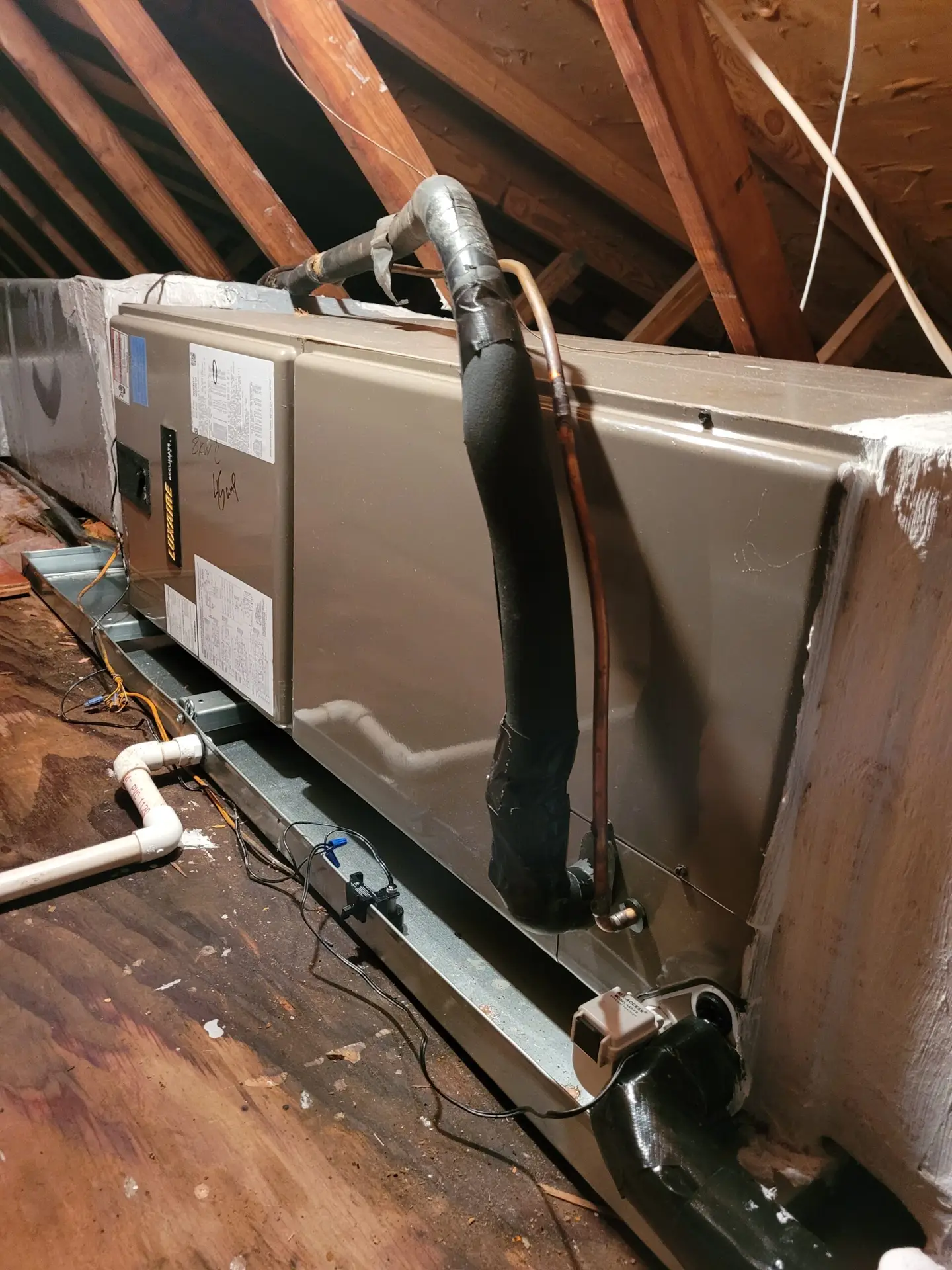
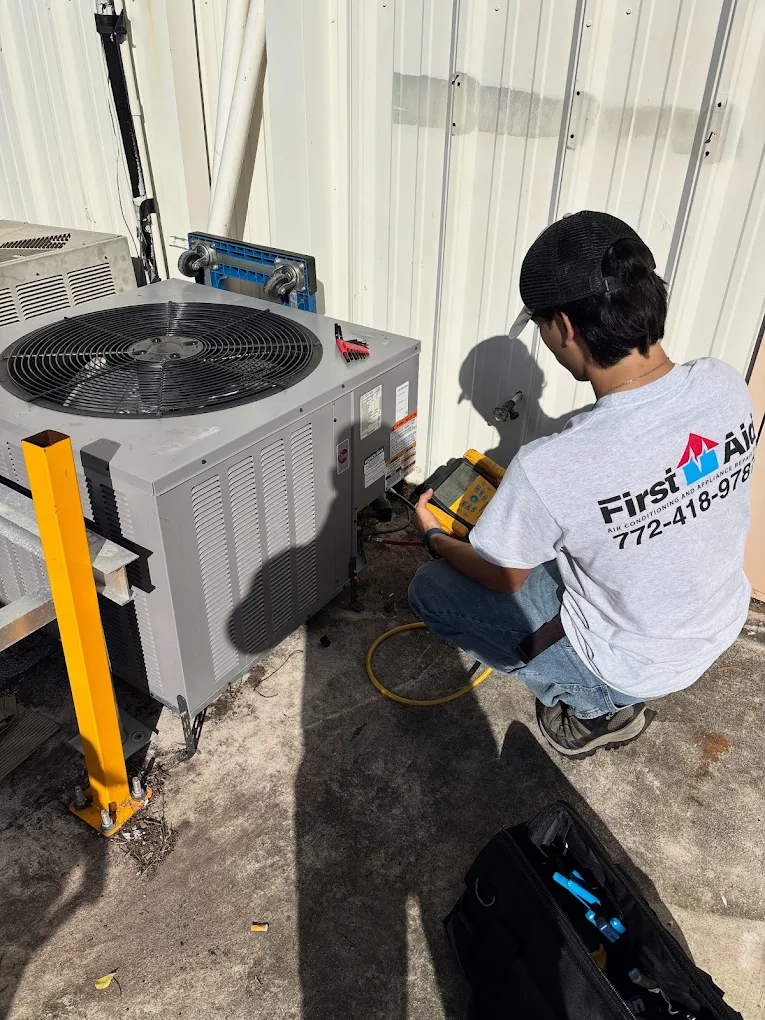
We started with a full electrical safety check before applying any power to the system. With the breaker still off, we pulled the service panel on the condenser to look for water inside the control board housing, capacitor housing, and contactor housing. We checked for visible corrosion on the high-voltage terminals. We pulled the fan motor and inspected the bearings for water intrusion. The control board was the part we were most worried about, and when we pulled it for inspection we found some moisture residue on the back side. Not enough water to have shorted across the traces, but enough that we recommended replacing it preemptively rather than risk an intermittent failure two weeks later. Intermittent failures on a control board are the worst kind to chase, because the system might run fine for a week and then quit randomly during peak heat.
The line set fittings looked sound from the outside, but Florida-grade salt air plus standing water is a worse combination than either alone, so we pressure-tested the lines to confirm refrigerant line integrity. They held pressure, which was good news. The fan motor bearings were dry. The contactor was clean. The capacitor was reading at spec. Once we replaced the control board and resealed the service panel with a fresh gasket, the system was safe to power back on.
While we were on site, we recommended two upgrades that turn a hurricane-prone Florida AC into a much more resilient system. First, a hard-start kit installed at the compressor. A hard-start kit gives the compressor a boost of starting torque on each cycle, which matters during post-storm grid recovery when utility power is cycling on and off as crews restore service. Without a hard-start kit, those repeated half-power starts can damage the compressor over time. With one installed, the compressor either gets enough power to start cleanly or it doesn't try at all. Cleaner cycles, less wear, much lower risk of a post-storm compressor failure.
Second, we installed a whole-home surge protector at the main electrical panel. Florida summer storms produce lightning surges that travel down power lines, and even homes without direct lightning strikes regularly take secondary surges that fry control boards, capacitors, and electronics. A panel-mounted surge protector clamps those surges before they reach the AC and the rest of the home electronics. For Treasure Coast homes in particular, this is one of the highest-leverage investments you can make to extend the life of expensive equipment.
After a major storm, before you turn anything electrical back on, walk the property and look at what got wet. If your outdoor AC condenser was anywhere near standing water, leave the breaker off and call us. Cleaner restarts, fewer compressor failures, and the kind of post-storm hardening every Treasure Coast home should have. Hurricane season runs June through November and the Treasure Coast gets hit hard every few years. Calling First Aid Air Conditioning at 772-418-9787 for a post-storm inspection costs a fraction of what a fried control board or a damaged compressor costs to replace.


.svg)
.svg)