©2026 First Aid Air Conditioning Inc. All rights reserved. A Trades Mosaic Company, designed by RMH Websites.

.svg)
.svg)
A Jensen Beach restaurant owner had been dealing with the worst kind of AC problem. Surprise failures during service. A rooftop unit going down in the middle of a Friday lunch rush isn't just uncomfortable for guests sweating through their lunch. It's hours of lost revenue, refunds and comps, a stack of bad reviews on Google and Yelp by Monday morning, and (for restaurants) a real food safety concern because higher indoor temps put walk-ins and prep stations under more cooling load. He'd had three unplanned failures in the previous twelve months. He wanted something more proactive than the call-when-it-breaks approach.
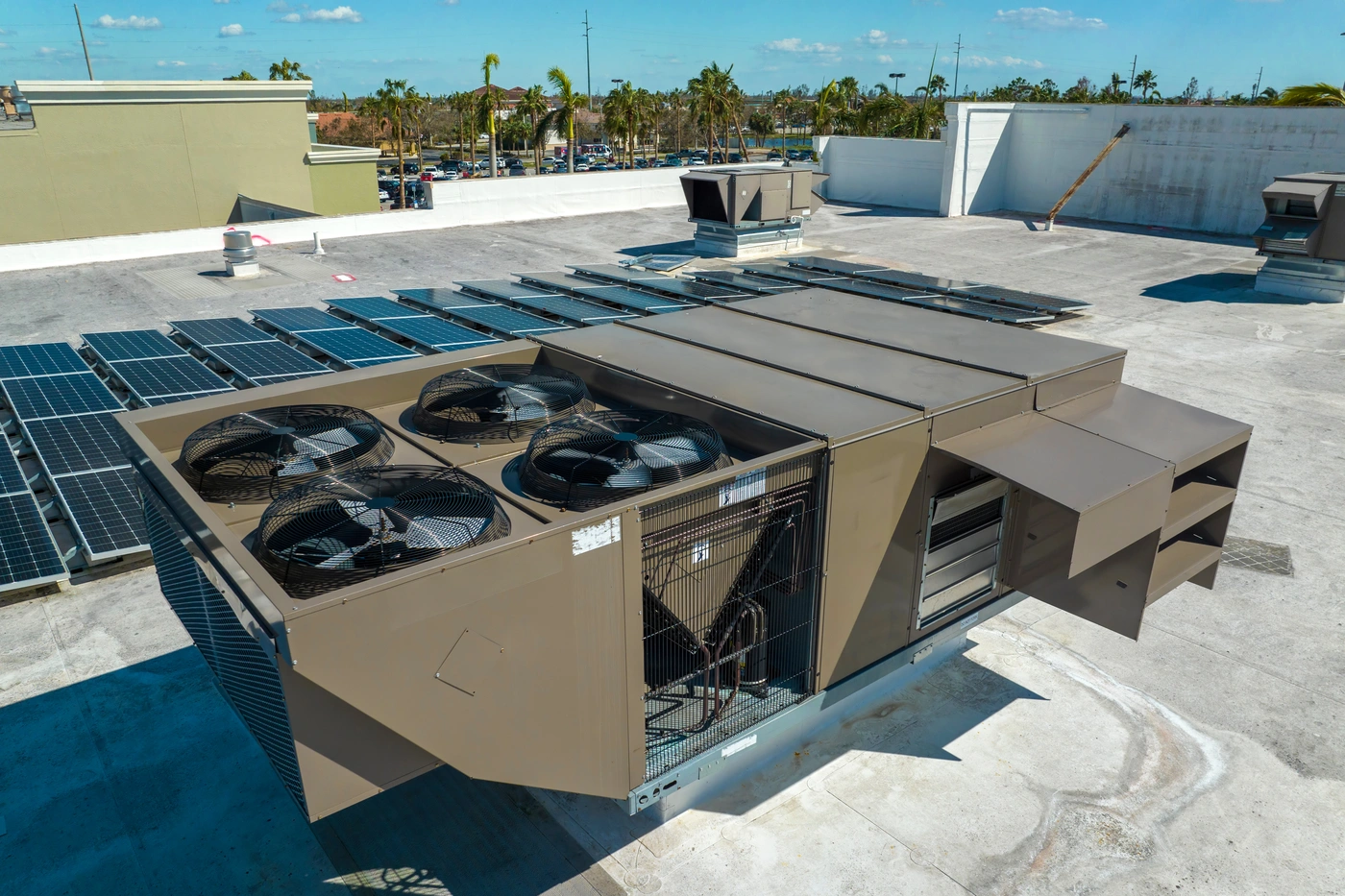
We came out for an initial site survey on a Tuesday morning, the slowest part of his week. The restaurant had two rooftop units (RTUs), one serving the dining room and one serving the kitchen and prep area. Both were standard 5-ton commercial split systems, about nine years old, which is well into the back half of a typical RTU lifespan. Both were due for proper maintenance that they hadn't been getting. The previous service relationship had been an annual visit by a residential HVAC company that didn't really understand commercial rooftop work, which is a different animal than residential AC for several reasons we walked through with him.
RTUs run more hours per day than residential systems. A typical residential AC runs maybe ten or twelve hours a day on a hot Florida day. A restaurant RTU runs from open to close plus prep time, which is often fourteen to sixteen hours a day with peak load during lunch and dinner. They also handle higher latent loads because of all the moisture coming off the kitchen line, the dishwashers, the steam tables, and the guest occupancy. And they're often exposed to higher dust loads and grease (especially the kitchen RTU) because of the kitchen exhaust hood discharge near the rooftop. All of that means RTUs need maintenance more often than residential systems, not less.
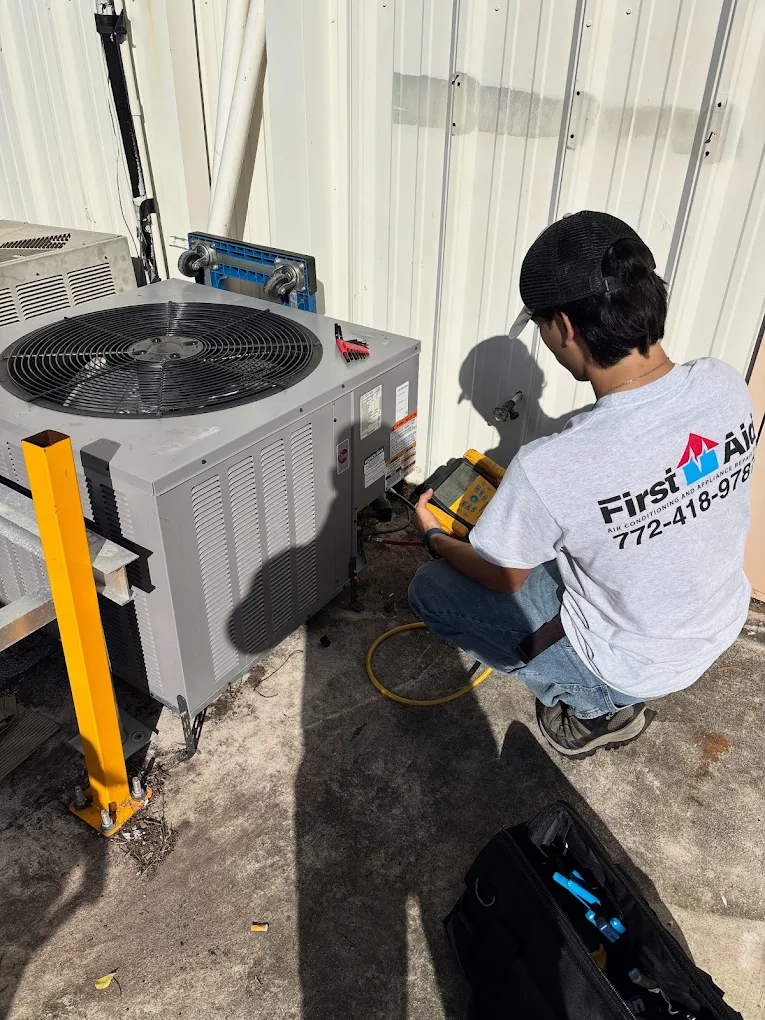
We built a quarterly service contract that addressed both the operational reality of restaurant HVAC and the owner's specific risk tolerance. Four scheduled visits per year. A pre-summer tune-up in March or April before peak cooling load hits in May, with the dining room RTU as the priority since that one drives guest comfort most directly. A pre-hurricane-season inspection in late summer so both systems are ready for storms and the post-storm recovery weeks, including surge protection verification and condensate drain clearing. A post-storm inspection after any major weather event covered in the contract. And a deep-clean visit in winter (the slowest season for the restaurant) that includes full coil cleaning on both units, drain pan cleaning, refrigerant charge verification, electrical contact tightening, and blower wheel cleaning on the kitchen unit, which collects grease faster than the dining unit.
The contract also includes priority dispatch during business hours, discounted repair labor (fifteen percent off standard rates), and proactive parts replacement when something looks like it's about to go. The proactive part is the biggest difference. On a maintenance visit, if we see a capacitor reading low, a contactor pitting, or a blower belt starting to slip, we replace it that visit instead of waiting for it to fail during Friday dinner service.
The contract started in March. Since then the restaurant has had zero AC downtime during operating hours. All maintenance happens before doors open or after close. There have been two situations where we caught and replaced parts proactively before they failed (a contactor on the kitchen unit and a low capacitor on the dining unit), which would have been emergency calls under the previous service relationship. The owner says the peace of mind alone is worth the contract price, and the actual cost savings on emergency dispatch fees and lost revenue from downtime more than cover the contract on top of that.
If you run a restaurant, retail space, office, medical or dental practice, short-term rental portfolio, or any other small commercial property on the Treasure Coast, a service contract is almost always the right move. Predictable cost, proactive maintenance, priority dispatch, and zero unplanned downtime during operating hours. Call First Aid Air Conditioning at 772-418-9787 to talk through a service contract built for your specific business.


.svg)
.svg)